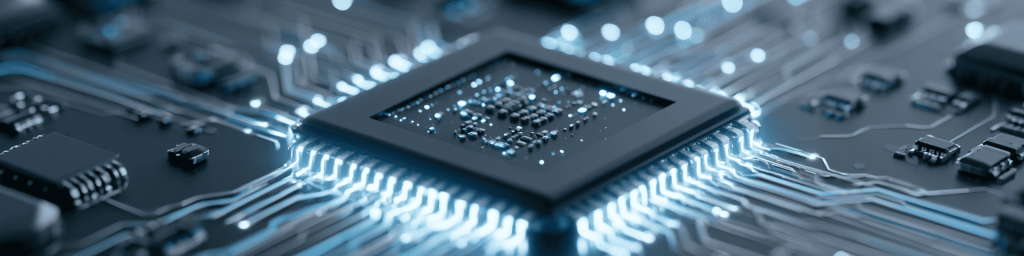
Navigating the Post-Moore’s Law Era: AI, Packaging, and Data Reshape Semiconductor Manufacturing
The era defined by simply making transistors smaller and more numerous is drawing to a close. The semiconductor industry is now entering a new phase where the old rules no longer apply. As experts recently discussed, the future of making chips hinges not just on physics, but on intelligence, integration, and data. The industry’s progress is increasingly powered by system-level efficiency, innovative ways to package chips together, and smart, data-driven manufacturing ecosystems.
Why Simply Shrinking Transistors is No Longer Enough
For decades, the driving force behind more powerful electronics was Moore’s Law, the observation that the number of transistors on a chip doubles about every two years. This was achieved by shrinking transistor sizes. However, we are now approaching fundamental physical limits. When transistors get close to the size of atoms, problems like heat buildup, power leakage, and unpredictable behavior become incredibly hard to manage.
Creating chips at these advanced “nodes” (like 3 nanometers and below) requires immensely complex and expensive tools, such as Extreme Ultraviolet (EUV) lithography machines. This complexity means factories, or “fabs,” now generate staggering amounts of data from every step of the process—from the tools that etch patterns onto silicon wafers to the sensors that inspect for microscopic defects.
The Rise of the AI-Powered Fab
This explosion of manufacturing data is where artificial intelligence (AI) and machine learning are stepping in to revolutionize the industry. A modern chip factory involves thousands of intricate steps where countless variables interact. Old-school, rule-based methods can’t keep up.
AI models can sift through terabytes of real-time sensor data to find hidden patterns humans would miss. They can predict when a critical machine is about to fail, allowing for maintenance before it breaks down—saving millions in lost production time. More importantly, they can analyze process data to pinpoint what causes defects, dramatically improving yield (the number of good chips per wafer). This transforms semiconductor manufacturing from a rigid process into a dynamic, self-optimizing system.
Bridging the Gap: Smarter Chip Design and Manufacturing
Another major shift is the tighter link between designing a chip and fabricating it. Historically, these were separate worlds. Today, at advanced nodes, the design of a circuit is deeply intertwined with the manufacturing process that will build it. This collaboration is called Design-Technology Co-Optimization (DTCO).
AI is supercharging this area too. AI-assisted design tools can automatically figure out the best layout for billions of transistors, manage power distribution, and ensure signals travel fast enough—tasks that used to take human engineers months. Generative AI is even being explored to help design chip layouts or predict potential manufacturing flaws before the design is finalized, slashing development time and cost.
Advanced Packaging: The New Frontier for Performance
If we can’t rely solely on transistor shrinkage, where do we get more power? The answer lies in how we assemble chips. Advanced packaging technologies are now a critical path for continuing Moore’s Law’s legacy of performance gains.
Instead of making one gigantic, monolithic chip, manufacturers are creating smaller, specialized “chiplets.” These chiplets—like a processor core, a graphics unit, or a block of high-speed memory—are then integrated into a single package using techniques like 2.5D and 3D stacking. They are connected by incredibly dense, high-bandwidth pathways that run through the silicon itself (called through-silicon vias, or TSVs).
This heterogeneous integration allows for mixing and matching the best technology for each function. It’s particularly crucial for artificial intelligence applications, where shuttling massive amounts of data between processors and memory is often the real bottleneck, not raw transistor count.
The Backbone: Data Infrastructure for the Modern Fab
None of this AI-driven innovation is possible without a powerful digital backbone. The data infrastructure supporting a fab has become as strategic as the manufacturing tools themselves. AI analytics require scalable, high-speed storage systems that can handle petabyte-scale datasets with minimal delay.
Engineering workflows are globally distributed, involving massive simulation files and collaborative teams. High-performance, cloud-integrated storage is essential for running complex design simulations, creating “digital twins” of the fab (virtual models for testing processes), and analyzing manufacturing data. These digital twins allow engineers to experiment and optimize production in a virtual world before committing to costly physical changes on the factory floor.
New Priorities: Security and Supply Chain Agility
As manufacturing gets smarter and more connected, new challenges emerge. The globalized nature of the chip supply chain—spanning materials, equipment, fabrication, and packaging across continents—makes it vulnerable to disruptions. AI is now being deployed to provide better visibility into this complex web, helping predict shortages and optimize inventory.
At the same time, with more data flowing to and from the cloud, protecting intellectual property and sensitive manufacturing information from cyber threats has become a top priority for every semiconductor company.
The Path Forward: Convergence and Intelligence
The future of semiconductor manufacturing is defined by convergence. Success will come from blending AI-driven analytics, robust data engineering, cutting-edge process technologies, and advanced packaging technologies like chiplets. The industry’s focus is shifting from the pure pursuit of smaller transistors to the intelligent optimization of the entire chip lifecycle—from design to fabrication to final package.
The next generation of computing innovation will be defined by companies that can master this convergence, extracting actionable knowledge from oceans of data to build smarter, more powerful, and more efficient chips for the world.
发表回复
要发表评论,您必须先登录。