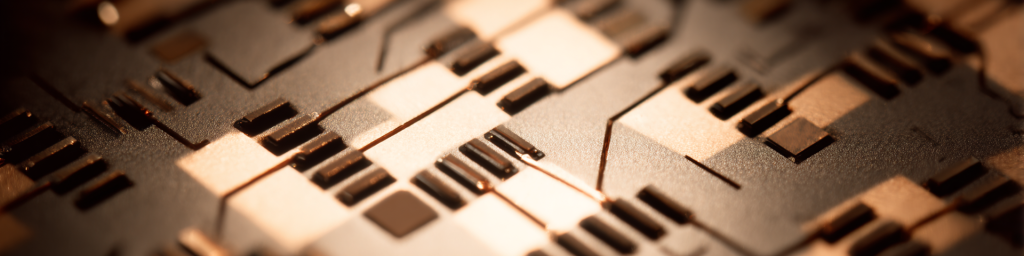
As 6G prototype systems move into intensive testing in 2026, the passive-component industry faces a defining hurdle: controlling dielectric loss above 50 GHz. Multi-Layer Ceramic Capacitors (MLCCs), among the most widely used passives in electronics, must evolve to meet the performance requirements of sub-terahertz (sub-THz) links. This article reviews the material-science advances, ceramic powder engineering, and industry forces shaping ultra-high-frequency MLCC development for 6G pioneer bands.
What Is Driving the Need for Ultra-High-Frequency MLCC in 6G Networks?
The 6G Frequency Landscape
6G targets bands ranging from the upper millimeter-wave (mmWave) spectrum above 50 GHz to sub-terahertz bands approaching 300 GHz and beyond. Ericsson, Nokia, and T-Mobile have begun prototype activity in bands such as 6.4–7.5 GHz and at carrier frequencies above 100 GHz. These bands promise large bandwidth but also bring severe attenuation and component-level loss that many 5G-era passive designs were not built to handle.
MLCCs play key roles in RF front-end modules as decoupling, bypass, and DC-blocking capacitors. Above 50 GHz, the dielectric loss tangent (tan δ) of conventional ceramics, often based on barium titanate (BaTiO₃) formulations, can rise sharply. When tan δ exceeds 0.001 at these frequencies, insertion loss, signal degradation, and thermal stress can become unacceptable in tightly integrated 6G transceiver modules.
Why Conventional MLCC Dielectrics Fall Short
Standard MLCC dielectrics are classified under EIA codes such as X7R, X5R, and C0G (NP0). While C0G capacitors use calcium zirconate (CaZrO₃) or magnesium titanate-based ceramics with relatively low loss at microwave frequencies, performance can degrade above 30–40 GHz. Key drivers include:
- Higher ionic and dipolar relaxation loss in perovskite-structured ceramics at mmWave and sub-THz frequencies.
- Grain-boundary effects that add parasitic resistance and scattering as wavelengths approach microstructure feature sizes.
- Electrode-dielectric interface loss that increases at ultra-high frequency due to skin effect and current crowding.
Together, these limits create a market gap: 6G hardware needs MLCC dielectrics engineered for ultra-low loss above 50 GHz.
How Are Low-Loss Dielectric Ceramics Evolving for Sub-THz Applications?
Key Material Families Under Development
Researchers and manufacturers are exploring multiple ceramic systems to meet 6G-frequency MLCC loss targets:
1. Cordierite-Based Ceramics (Mg₂Al₄Si₅O₁₈)
Cordierite offers a low dielectric constant (εr ≈ 4.5–5.5) and tan δ values below 0.0005 at microwave frequencies. Studies in the Journal of the American Ceramic Society report that optimized cordierite compositions can maintain stable dielectric properties up to 60 GHz, supporting interest in 6G MLCC use. Low permittivity can also reduce parasitic coupling in dense RF module layouts.
2. Ba(Mg₁/₃Nb₂/₃)O₃ (BMN) Complex Perovskites
BMN is a widely studied microwave dielectric family with Q×f values reported above 100,000 GHz, a common figure of merit inversely related to dielectric loss. Work reported in Ceramics International shows that MgO–Al₂O₃–SiO₂ glass additives can lower sintering temperature while preserving low-loss behavior, improving compatibility with base-metal electrode (BME) MLCC processes.
3. LTCC-Compatible Low-Loss Formulations
Low-Temperature Co-fired Ceramic (LTCC) technology enables multilayer integration of passives and transmission lines in a single ceramic substrate. LTCC dielectric tapes based on SmTaO₄ and YTaO₄ systems with ZnO–B₂O₃–SiO₂ glass additives have been reported with tan δ < 0.0003 at 10 GHz and show encouraging stability at higher frequencies. These materials can help bridge discrete MLCCs and integrated 6G RF modules.
4. Alumina and Non-Oxide Ceramics
High-purity alumina (Al₂O₃, 99.5%+) remains a benchmark low-loss ceramic with tan δ ≈ 0.0001 at 10 GHz. Aluminum nitride (AlN) combines low dielectric loss with high thermal conductivity (170–230 W/m·K), making it attractive where 6G hardware must dissipate significant heat.
The Role of Ceramic Powder Engineering
Turning a laboratory dielectric into a production MLCC starts with powder quality. Ultra-high-frequency MLCCs typically require powders with:
- Sub-micron to nano-scale particle size (100–500 nm) to support thin dielectric layers (below 1 μm per layer).
- High chemical purity (>99.9%) to reduce impurity-driven conduction loss.
- Narrow particle-size distribution to improve green-tape density and reduce sintering defects.
- Controlled phase composition to avoid secondary phases that act as localized loss centers.
Ceramic powder suppliers such as Sakai Chemical Industry (Japan), Ferro Corporation, and Nippon Chemical Industrial are investing in hydrothermal and sol-gel routes to produce ultra-fine, high-purity powders aimed at low-loss MLCCs. Hydrothermal methods can yield highly crystalline powders at lower temperatures, which can help limit lattice defects associated with high-frequency loss.
What Does the Competitive Landscape Look Like for Ultra-High-Frequency MLCC?
Major MLCC Manufacturers and Their 6G Strategies
The global MLCC market, valued at approximately $15 billion in 2025, is led by Murata Manufacturing, Samsung Electro-Mechanics (SEMCO), TDK, Taiyo Yuden, and Yageo/KEMET. Each is positioning for the 6G transition:
- Murata has expanded high-frequency MLCC offerings, including ultra-small 008004 (0.25 × 0.125 mm) form factors for mmWave module integration. The company holds extensive IP in thin-layer processing and low-loss C0G formulations.
- TDK is leveraging materials expertise in multilayer thin-film processing to develop capacitors with electrode geometries optimized for operation above 40 GHz.
- Vishay markets its VJ HIFREQ series, positioned around lower ESR than competing 0402 and 0603 MLCCs across GHz-range operation, responding to 5G Advanced and early 6G needs.
- Samsung Electro-Mechanics is investing in next-generation dielectrics and advanced metallization, including copper inner electrodes, to reduce material and resistive loss at ultra-high frequency.
- Kyocera emphasizes LTCC-integrated platforms that enable co-fired passives for 6G antenna-in-package (AiP) modules.
Emerging Players and Research Institutions
Beyond incumbent manufacturers, academic and government groups are contributing key work:
- The Georgia Institute of Technology and the iNEMI consortium have published joint efforts to benchmark candidate dielectric ceramics for 5G/6G packaging from 10 GHz to 170 GHz.
- Tsinghua University researchers, publishing in the Journal of Advanced Ceramics (2024 Impact Factor: 16.6), report novel microwave dielectric ceramics with ultra-high Q×f values aimed at 6G device applications.
- NIST (National Institute of Standards and Technology) is running round-robin measurement programs to establish reference materials for permittivity and loss tangent in the mmWave regime, which can support more reliable qualification.
How Will 6G Testing in 2026 Shape MLCC Material Requirements?
Prototype-Stage Demands
The 2026 wave of 6G prototype testing, led by operators such as T-Mobile (with Ericsson and MediaTek) and research consortia across the EU, Japan, South Korea, and China, will bring scaled, real-world validation of passive components at higher frequencies. Requirements commonly discussed in these programs include:
- Dielectric loss tangent < 0.0005 at the target operating band (50–150 GHz).
- Capacitance stability within ±5% across operating temperature (−40°C to +125°C).
- Ultra-small form factors (0201 and below) to reduce parasitic inductance and fit AiP and system-in-package (SiP) architectures.
- Reliability under high-frequency cycling, with limited public accelerated-life data at sub-THz frequencies, creating both risk and opportunity.
Material Qualification Bottlenecks
A major obstacle is limited standard measurement infrastructure above 50 GHz. Conventional impedance and network-analyzer methods can lose accuracy in this regime. Split-post dielectric resonators (SPDR), Fabry-Pérot open resonators, and terahertz time-domain spectroscopy (THz-TDS) are increasingly used, but inter-laboratory reproducibility remains a work in progress, underscoring the value of NIST standardization.
What Are the Broader Implications for the Passives and Materials Supply Chain?
Upstream: Ceramic Powder and Raw Material Suppliers
The move toward ultra-low-loss formulations will increase demand for high-purity specialty oxides, including magnesium oxide (MgO), niobium pentoxide (Nb₂O₅), tantalum pentoxide (Ta₂O₅), and rare-earth oxides. Because some inputs are sourced from geopolitically sensitive regions, supply resilience will become a strategic concern for MLCC manufacturers.
Midstream: MLCC Fabrication and Process Innovation
Scaling sub-1 μm dielectric layers with consistent low loss requires advances in:
- Tape casting with nano-ceramic slurries.
- Precision screen printing of internal electrodes with sub-micron registration.
- Atmosphere-controlled sintering to limit defect formation in oxygen-sensitive compositions.
- In-line dielectric characterization at GHz frequencies for process control.
Downstream: Module Integrators and System OEMs
6G RF module designers, including Qualcomm, MediaTek, and Samsung LSI, need validated component models, such as S-parameters and equivalent circuits, at operating bands. MLCC suppliers that provide robust high-frequency characterization and co-design support are positioned to secure early design wins.
What Comes Next for Ultra-High-Frequency MLCC?
The convergence of 6G prototype testing, ceramic powder engineering, and new low-loss dielectric systems is creating a pivotal moment for the MLCC industry. Between 2026 and 2030, the industry can reasonably expect:
- Commercial MLCCs rated above 50 GHz, initially for test equipment, prototype base stations, and satellite terminals.
- Standardized dielectric measurement methods at mmWave and sub-THz frequencies, driven by efforts from NIST, IEC, and 3GPP-adjacent working groups.
- More vertical integration into upstream ceramic powder supply to secure quality and continuity.
- Growth in LTCC-integrated passive modules that combine ultra-high-frequency capacitors, filters, and matching networks for 6G AiP applications.
The passive-component industry is approaching a generational shift. The organizations that solve dielectric loss above 50 GHz will help define the materials foundation for 6G communication.
发表回复
要发表评论,您必须先登录。