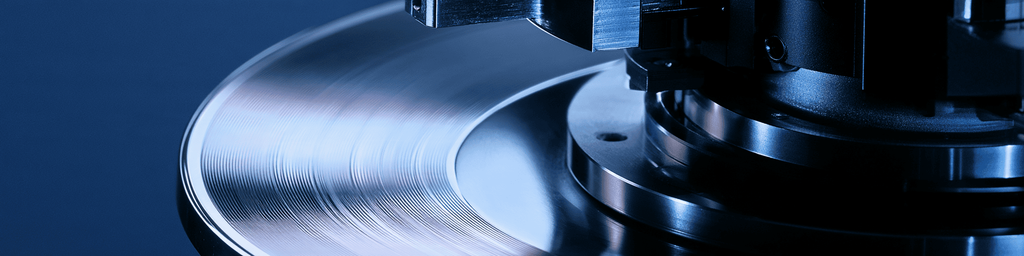
DUV optics used in semiconductor manufacturing are subjected to billions of laser pulses across their operational lifespan. This creates a unique qualification gap that factory-fresh reflectance specs or laser-induced damage threshold (LIDT) scores alone cannot fill.
While a newly manufactured mirror may pass all initial optical tests and boast a high LIDT rating, these metrics give zero insight into how its performance will shift after years of repeated 193nm DUV laser exposure.
Findings from the OPTOMAN DUV mirror test show that an ion-beam-sputtered 193nm mirror exposed to roughly five billion pulses at 100 mJ/cm² fluence saw a normalized reflectance drop of less than 0.5% – far outperforming traditional evaporated mirror alternatives. This result does not set a universal lifespan for all DUV optics, but it clearly demonstrates why cumulative exposure must be evaluated separately from initial performance and catastrophic failure risks to improve semiconductor lithography tool uptime.
Why Reflectance and LIDT Only Show Half the Picture
Reflectance measures how efficiently a laser mirror bounces a light beam, directly impacting overall system loss and energy efficiency. LIDT, by contrast, defines the exact conditions under which laser exposure will cause visible damage to the optic, per standardized testing protocols.
Both metrics are critical, but neither predicts long-term performance stability after billions of pulses. Over extended DUV exposure, optical properties shift slowly: reflectance can fall, absorption can rise, and these changes can alter wavefront accuracy, thermal behavior, and other key parameters that impact full system performance.
Optics research also distinguishes between initial damage onset, damage growth over time, and gradual functional performance shifts during operation. Test data from studies using different wavelengths or pulse types cannot be directly applied to 193nm semiconductor lithography systems, but the core qualification framework remains consistent.
Catastrophic damage is only one limit for optical component performance. For semiconductor manufacturing equipment, three core metrics are required for full qualification:
- Initial performance: Confirms the optic meets all published specifications when new.
- Damage resistance: Defines the threshold for visible or functional damage under test conditions.
- Lifetime stability: Tracks how much performance shifts after extended operational exposure.
Key Insights From Five Billion 193nm Pulses Testing
OPTOMAN’s long-term stability test offers a rare direct measurement of real-world DUV optic lifespan. The ion-beam-sputtered (IBS) coated mirror was exposed to ~5 billion 193nm pulses at 100 mJ/cm² fluence. Post-test, normalized reflectance dropped by less than 0.5%, no catastrophic damage was observed, and performance remained nearly identical to factory specs.
Testing across billions of pulses aligns with prior 193nm lithography optics research: one landmark study exposed fused silica to 40 billion 193nm pulses to identify performance shifts that only become measurable after extended irradiation.
It is important to note that 5 billion or 40 billion pulses are not universal lifespan targets for all DUV optics. Pulse count cannot be evaluated in a vacuum: fluence, pulse length, repetition rate, beam properties, material composition, and operating environment all impact how an optic ages.
The OPTOMAN test results are not a universal 5-billion-pulse warranty for all DUV use cases. Their core value is in quantifying real performance shifts after a defined accumulated exposure, giving equipment engineers data that a factory-fresh reflectance test can never provide.
How Cumulative DUV Exposure Impacts More Than Just Reflectance
Long-term DUV exposure also alters the optical substrate and broader functional performance. Research on fused silica shows repeated 193nm exposure causes material densification, which changes refractive properties and optical path length. Other studies have linked extended DUV exposure to higher absorption, heat-related wavefront deformation, and permanent material changes.
These effects are critical because an optic can start hurting system performance long before visible damage appears. Changes may present as slow shifts in reflectance, transmission, absorption, light scatter, or wavefront accuracy.
The system-level impact of these shifts depends entirely on where the component is installed in the lithography tool. A small drop in mirror reflectance can reduce the optical power reaching downstream processing steps. Higher absorption can create unwanted thermal gradients. Shifts in optical path length or wavefront performance can force more frequent tool calibrations or shrink the available process margin for chip manufacturing.
A minor performance shift may be acceptable in one part of a tool but cause major issues in another. Many laser beam delivery systems include more than 10 mirrors, so small performance shifts add up as the beam bounces between components. After 10 reflections from degraded mirrors, the resulting laser beam may no longer meet the strict requirements for semiconductor lithography.
For this reason, acceptable performance drift must be defined based on the full optical system’s requirements, not generic component failure definitions.
3 Stages of Qualifying DUV Optics for Billion-Pulse Lifespans
For DUV semiconductor lithography systems, full optical component qualification follows three key stages:
1. Initial Performance Validation
All new components must meet required reflectance, transmission, absorption, and wavefront accuracy specs out of the box.
2. Damage Resistance Testing
There must be a sufficient safety buffer between standard operating conditions and the LIDT measured under relevant test protocols.
3. Lifetime Stability Verification
Optical performance must stay within allowed tolerance limits after the total accumulated exposure expected across the component’s operational lifespan.
A meaningful lifespan requirement must account for operating wavelength and fluence, pulse duration and repetition rate, total cumulative pulse count, beam diameter and profile, angle of incidence, polarization, and allowed performance drift.
Operating environment also plays a key role, especially if contamination or repeated cleaning cycles may degrade optical performance over time.
Acceptable performance shifts ultimately depend on the optic’s role in the system. A <0.5% reflectance drop may be fully acceptable in one optical path but require close monitoring in another. The core question is whether any performance shift impacts the qualified process window, required calibration frequency, or planned maintenance intervals.
Initial reflectance tells you how an optic performs on day one. LIDT defines the threshold for catastrophic damage under test conditions. Only lifetime testing shows how an optic will perform across the billions of pulses it will see during its service life. For semiconductor equipment built to run for years without unplanned downtime, accumulated exposure testing must be a core part of the qualification process.
发表回复
要发表评论,您必须先登录。