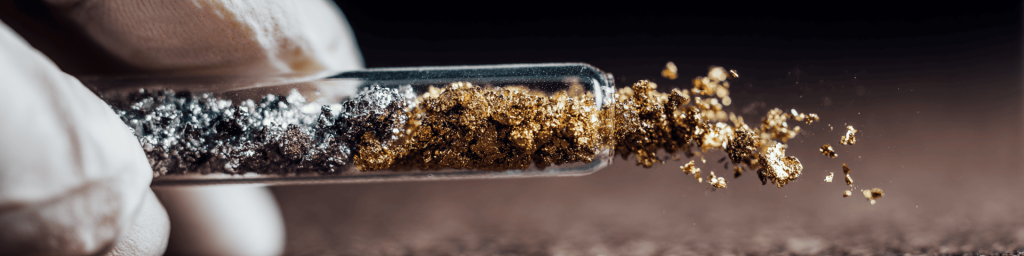
The semiconductor industry is entering its first true circularity decade. Three forces are colliding at once:
- Regulatory pressure. The EU Corporate Sustainability Reporting Directive (CSRD) and its European Sustainability Reporting Standards (ESRS) began phasing in mandatory disclosures from FY2024 reports onward, with broader coverage taking effect through 2026–2028. The EU Critical Raw Materials Act (Regulation 2024/1252) sets binding 2030 benchmarks for domestic extraction, processing, recycling and supplier diversification of strategic materials — including many metals found in chips. The revised Waste Shipment Regulation (2024/1157) restricts export of hazardous e-waste outside the OECD. In the U.S., the SEC climate-disclosure rule and state-level Right-to-Repair and e-waste statutes push the same direction.
- Resource scarcity. A modern logic wafer contains gold wire bonds, silver paste, palladium and platinum in interconnects and sensors, plus copper, tin, tantalum and rare earths. According to the UN’s Global E-waste Monitor 2024, the world generated 62 million tonnes of e-waste in 2022, of which less than a quarter was formally collected and recycled. The embedded value of metals in that stream was estimated at roughly USD 91 billion.
- Margin opportunity. Hydrometallurgical refiners have historically relied on cyanidation or aqua regia — effective but energy-intensive, hazardous, and increasingly hard to permit. A green chemistry alternative that lowers OPEX, reduces Scope 3 emissions, and generates CSRD-grade data is no longer a research curiosity; it is a P&L lever.
This is why bio-enzymatic extraction — sometimes grouped under biohydrometallurgy, bioleaching and biosorption — has moved from university pilots into first-of-a-kind industrial demonstrations.
What Is Bio-Enzymatic Extraction of Precious Metals?
A Working Definition
Bio-enzymatic extraction uses living microorganisms or their isolated enzymes to selectively dissolve, complex, or adsorb metals from crushed printed circuit boards, wafer dicing scrap, and packaging materials. Instead of strong mineral acids or cyanide, the lixiviant is produced in situ by biology — typically an organic acid, a thiosulfate-type complexant, a cyanogenic metabolite, or a metal-binding protein.
There are four main families that practitioners should know:
- Acidophilic bioleaching — Acidithiobacillus ferrooxidans, A. thiooxidans, Leptospirillum ferrooxidans and related chemolithotrophs oxidize Fe²⁺ and reduced sulfur compounds. The resulting Fe³⁺/H₂SO₄ system dissolves base metals (Cu, Ni, Zn, Sn) that otherwise shield the precious-metal fraction.
- Cyanogenic bioleaching — Chromobacterium violaceum, Pseudomonas fluorescens, P. putida and Bacillus megaterium secrete hydrogen cyanide as a secondary metabolite, selectively complexing gold and silver as soluble dicyanoaurate(I) / dicyanoargentate(I). The cyanide concentrations are orders of magnitude lower than conventional cyanidation.
- Heterotrophic / organic-acid leaching — Aspergillus niger and Penicillium spp. secrete citric, gluconic and oxalic acids that mobilise rare earths and some base metals from ceramic substrates.
- Biosorption & bioreduction — peptides, chitosan, alginate, and engineered proteins (e.g., metal-binding “delftibactin” from Delftia acidovorans) selectively bind Au(III) or Pd(II) from dilute pregnant leach solutions, enabling downstream recovery as nanoparticles.
Enzymes vs. Whole Cells
“Bio-enzymatic” is often used loosely. In practice, industrial chip recycling uses whole-cell fermentation (cheaper, self-replicating catalyst) for bulk leaching, and cell-free enzyme or peptide systems (laccases, metal-reductases, metallothioneins, phytochelatins) for polishing, selectivity, and recovering metals from complex pregnant liquors. A realistic flowsheet combines both.
How It Fits into a Wafer-Recycling Flowsheet
A decommissioned wafer — whether a failed-yield lot, end-of-life sensor array, or depopulated automotive MCU — is not a homogeneous ore. A defensible green-chemistry flowsheet therefore looks like this:
Step 1 — Pre-treatment and Liberation
Wafers are de-packaged (thermal or cryogenic de-bonding), shredded, and classified. Polymer encapsulant is separated for pyrolysis or mechanical recycling. The metallic fines concentrate in sub-millimetre fractions suitable for aqueous processing.
Step 2 — Base-Metal Bio-Oxidation
An acidophile consortium (A. ferrooxidans + A. thiooxidans) in a stirred-tank or heap reactor oxidises copper, tin and solder components over days to weeks at 30–45 °C and pH 1.5–2.0. This step unlocks the precious-metal surface that is otherwise passivated.
Step 3 — Precious-Metal Bio-Complexation
The residue is transferred to a cyanogenic reactor (e.g., C. violaceum or an engineered P. fluorescens). Dissolved oxygen, glycine supplementation and pH control (9.0–10.5) drive biogenic HCN formation and gold/silver dissolution. Published academic pilots (Brandl, Faramarzi, Natarajan, Kaksonen and others over the last two decades) report gold recoveries commonly in the 10–70 % range depending on feed and residence time — meaningful, but still below conventional cyanidation, which is exactly where engineering optimisation is now focused.
Step 4 — Selective Bio-Recovery
Pregnant leach solution is contacted with biosorbents (chitosan beads, alginate-immobilised biomass) or cell-free peptide resins that selectively bind Au, Ag, Pd. Elution and electrowinning or bio-reduction produce a high-purity metal product.
Step 5 — Effluent Polishing and Carbon Accounting
Residual cyanide is naturally degraded by Pseudomonas-family cyanide hydratases/dihydratases, closing the loop. Mass and energy balances feed directly into CSRD/ESRS E1 (climate), E2 (pollution) and E5 (resource use & circular economy) disclosures.
The ESG and Regulatory Business Case
Why CFOs Should Care
- CSRD/ESRS E5 requires quantitative disclosure of inflows and outflows of materials, recycled content, and waste diverted from disposal. Bio-enzymatic routes generate cleaner, auditable data than informal smelting.
- EU Critical Raw Materials Act sets a 2030 target that at least 25 % of the EU’s annual consumption of strategic raw materials come from domestic recycling. Chip-scrap recyclers that can document green recovery of Au, Ag, Pd, Ga, Ge and REEs become preferred suppliers.
- Taxonomy alignment — recycling of e-waste is listed as a substantial-contribution activity under the EU Taxonomy’s Circular Economy objective. A bio-route typically has a stronger DNSH (Do No Significant Harm) profile than cyanidation.
- Scope 3 emissions — LCA studies published in Journal of Cleaner Production, Resources, Conservation & Recycling and Minerals Engineering consistently show lower cumulative energy demand and global warming potential for bioleaching vs. pyrometallurgy per gram of recovered gold, especially when the feed is low-grade.
- Insurance and permitting — replacing bulk cyanide and aqua regia inventories materially reduces Seveso-type risk classifications and insurance premiums.
Where the New Profit Pool Sits
Traditional smelter terms penalise low-grade, heterogeneous chip scrap. A regional bio-hydrometallurgical micro-refinery, sized at a few hundred to a few thousand tonnes per year of wafer-grade feed, can:
- capture the refining margin that today flows to offshore smelters;
- monetise green premiums from OEMs that need verifiable low-carbon recycled gold and silver for their own Scope 3 targets;
- sell data-as-a-service (chain-of-custody, LCA, mass balance) to brand owners under CSRD.
Competitive Landscape and Market Gaps
Who Is Active Today
Without naming any unverified commercial claims, the public landscape includes:
- Academic and government pilots at institutions such as ETH Zürich, the University of Tehran, CSIRO, VTT, Helmholtz Institute Freiberg, and Chinese Academy of Sciences labs, all of which have published peer-reviewed results on bioleaching of PCBs and wafer scrap.
- Industrial bio-hydrometallurgy companies that have operated microbial leaching at scale for primary mining (e.g., for refractory gold ores and copper heaps) and are increasingly piloting e-waste feeds.
- E-waste refiners in the EU, Japan and Korea that already publish ISO 14001 / 14040 LCA data and are the natural integrators of bio-enzymatic polishing steps.
Visible Market Gaps (Where whychip.com Readers Can Win)
- Wafer-specific flowsheets. Most published bioleaching data is on shredded PCBs. Decommissioned wafers — with thin-film metallisation, high-purity Si/SiC/GaN substrates and advanced packaging — need dedicated recipes.
- Enzyme engineering for Pd and Pt. Palladium in advanced packaging is under-addressed by current cyanogenic microbes. Engineered metal-binding peptides are an open IP frontier.
- Modular, containerised bio-refineries co-located with fabs for on-site closed-loop recovery — aligned with fab-level Scope 3 and water-neutrality pledges.
- Digital MRV (measurement, reporting, verification) tooling that turns bioreactor telemetry into CSRD-ready disclosures.
- Standards & certification — a “Bio-Recovered Precious Metal” mark, analogous to RJC Chain-of-Custody, does not yet exist at scale.
Frequently Asked Questions
Is bio-enzymatic extraction really greener than cyanidation?
In most published life-cycle assessments, yes — especially on global warming potential, ecotoxicity and human-toxicity endpoints — provided the bioreactor uses renewable electricity and the residual biogenic cyanide is biologically degraded on site. The advantage narrows for very high-grade feeds where conventional cyanidation is already highly efficient.
How fast is it compared to chemical leaching?
Slower. Bio-oxidation of base metals typically takes days; biogenic gold leaching often takes 1–7 days depending on feed, biomass density and reactor design. This is why two-stage designs (chemical pre-treatment + bio-polishing, or bio-leach + conventional strip) are common.
Does it work on SiC and GaN wafers?
Research is early but promising. The silicon/SiC/GaN substrate itself is largely inert to these microbes; the targets are the metallisation and bonding layers. Recovery of gallium and germanium from III–V residues via Aspergillus-based organic-acid leaching has been demonstrated at lab scale.
What about cost?
Public techno-economic analyses (e.g., Işıldar et al., Waste Management; Kaksonen et al., Hydrometallurgy) suggest bio-routes are cost-competitive for low- to mid-grade e-waste and become increasingly attractive as carbon pricing, cyanide-permitting costs and ESG-linked financing spreads widen through 2026.
What are the main risks?
- Biological process variability and contamination control.
- Slower kinetics → larger reactor footprint.
- Biogenic cyanide is still cyanide — workplace safety and permitting remain serious.
- Feedstock heterogeneity from mixed chip generations.
A 2026 Action Checklist for Chip Recyclers
- [ ] Map your wafer-scrap streams by generation, package type and precious-metal content.
- [ ] Run a bench-scale bioleaching trial with a qualified academic or CRO partner; benchmark against your current route on Au, Ag, Pd recovery, OPEX, and LCA.
- [ ] Align the trial’s data model with ESRS E1, E2 and E5 disclosure requirements from day one.
- [ ] Engage OEM customers early — many will pay a verified green premium for recycled gold and silver that reduces their Scope 3.
- [ ] Build a modular pilot (2–20 tpa) before committing to a full refinery; bio-processes reward iterative learning.
- [ ] Track the EU Critical Raw Materials Act implementing acts and national e-waste rules in your operating geographies.
Conclusion
The convergence of tighter 2026 ESG rules, the Critical Raw Materials Act, and the rising embedded value of metals in decommissioned wafers makes bio-enzymatic extraction more than a laboratory curiosity. It is becoming the default green chemistry answer for chip recycling — lower in carbon, lower in toxicity, richer in auditable data, and newly profitable as green premiums and carbon pricing bite. Operators that industrialise wafer-specific bio-flowsheets in the next 18–24 months will define the margin structure of the decade.
发表回复
要发表评论,您必须先登录。