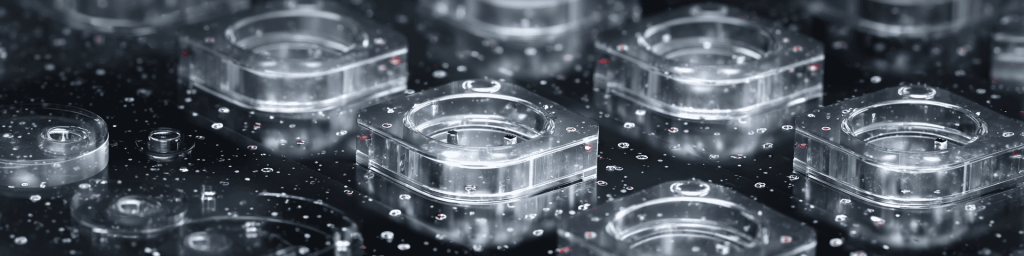
The display industry spent the last two years arguing about pixels per inch, peak nits, and pancake optics. In 2026, the conversation is quietly shifting to something far less glamorous but vastly more consequential for end users: how long does a MicroOLED panel actually last on a head?
With Apple’s next-generation Vision Pro reportedly pulling in Chinese OLEDoS suppliers such as BOE and SeeYa alongside Sony Semiconductor Solutions, and with Meta’s rumored 2026 Quest headset said to be sourcing OLED microdisplays from SeeYa and BOE, the supply chain is finally diversifying. The technical decoupling point — the place where one supplier’s panel will outlive another’s by years rather than months — is TFE thin-film encapsulation.
What Exactly Is MicroOLED (OLEDoS)?
MicroOLED, also known as OLED-on-Silicon (OLEDoS) or silicon-based OLED, replaces the traditional glass TFT backplane with a CMOS silicon wafer. Sub-pixels — typically white OLED stacks combined with color filters, or patterned RGB emitters — are deposited directly on the silicon, achieving pixel pitches around 7–8 μm and pixel densities exceeding 3,000 PPI.
For scale: the original Apple Vision Pro uses two MicroOLED panels totaling about 23 million pixels with a roughly 7.5 μm pixel pitch and ~3,380 PPI — densities that flat-panel OLEDs simply cannot reach. That makes MicroOLED the dominant near-to-eye (NTE) technology for high-end AR/VR/MR headsets, and the reference platform for everything written below.
Why MicroOLED, and not glass OLED or MicroLED, for AR?
- Resolution headroom: silicon lithography supports the micron-scale features AR optics demand.
- Form factor: OLEDoS panels are tiny, light, and easy to integrate into pancake or birdbath optics for AR devices.
- Color and contrast: self-emissive OLED still delivers true blacks and a wide color gamut, important for immersive content.
- Maturity gap with MicroLED: mass-transfer yield issues continue to delay full-color MicroLED at AR pixel densities, leaving MicroOLED as the production-ready choice through at least 2027.
The trade-off, however, is that the organic emitting stack is brutally sensitive to oxygen and moisture — and that is where TFE thin-film encapsulation enters the story.
TFE Thin-Film Encapsulation, Explained for AR Engineers
What problem does TFE solve?
OLED stacks degrade chemically when exposed to H₂O and O₂. Tiny amounts of permeation oxidize the cathode and the organic transport layers, creating non-emissive “dark spots” and accelerating overall luminance decay. The OLED industry’s de facto reliability target is a water vapor transmission rate (WVTR) on the order of 10⁻⁶ g/m²/day, which is several orders of magnitude tighter than what plastic substrates or basic single-layer barriers can achieve. That target is widely cited as the threshold needed to hit “tens of thousands of hours” of useful device life.
Classical glass-frit + desiccant encapsulation works for rigid TVs but is impractical for MicroOLED: panels are too small, too thin, and too thermally constrained on a CMOS wafer. Thin-film encapsulation replaces the glass cover with a multilayer stack deposited directly on top of the OLED, often only a few hundred nanometers to a couple of micrometers thick.
Anatomy of a modern TFE stack
A production-grade TFE stack on MicroOLED typically follows an inorganic / organic / inorganic “dyad” pattern:
- Inorganic barrier layer — usually Al₂O₃ deposited by atomic layer deposition (ALD), sometimes laminated with ZrO₂, HfO₂, or SiO₂. ALD enables conformal, pinhole-poor films that act as the primary moisture/oxygen barrier.
- Organic planarization layer — a polymer such as parylene-C, acrylate, or alucone, deposited by CVD or inkjet. It smooths over particle defects and decouples pinholes between inorganic layers, dramatically reducing the effective permeation path.
- Capping inorganic layer — a second ALD or PECVD oxide/nitride that seals the organic and provides scratch resistance.
Lab measurements support how powerful this architecture is. Single-density ALD Al₂O₃ films deliver WVTR around 4 × 10⁻³ g/m²/day, while multidensity Al₂O₃ structures using spatial ALD have demonstrated 5.3 × 10⁻⁵ g/m²/day — roughly two orders of magnitude better than a single-density layer. Optimized nanolaminate barriers deposited at 80 °C have been reported around 8.7 × 10⁻⁷ g/m²/day at room temperature, finally crossing the canonical 10⁻⁶ threshold needed for long-lifetime OLED devices.
Why ALD dominates MicroOLED TFE
- Conformality: ALD coats the topology of CMOS pixels, banks, and edges uniformly.
- Low-temperature compatibility: modern ALD recipes run at 60–100 °C, safely below the OLED denaturation point (~110 °C).
- Particle tolerance: dyad structures with organic interlayers neutralize the impact of stray particles that would otherwise create killer pinholes.
- Thickness control at the angstrom level: essential when total stack thickness must remain optically thin to avoid color shift through the color filter array.
How TFE Drives the Luminance Decay Curve
The decay model used in industry
MicroOLED life is typically characterized by the time it takes for luminance to fall to a fraction of its initial value — most commonly T95 (5% decay), T70, or T50. The dominant mathematical fit is the stretched-exponential decay (SED) model, often combined with brightness-restoration terms. Recent published work on OLEDoS microdisplays reports SED-based fitting accuracies above 99%, and in some cases improves life-prediction accuracy by ~79% over naive linear extrapolation.
In practice, three variables move the decay curve far more than anything else:
- Initial luminance — driving an OLED hard accelerates degradation super-linearly.
- Duty cycle — pulse-width-modulated MicroOLED panels behave very differently from DC-driven ones.
- Encapsulation quality — directly controls dark-spot growth and edge ingress, which degrade luminance even when pixels are off.
This is why two MicroOLED panels with identical emitters can show wildly different lifetime numbers: the TFE thin-film encapsulation quality is doing most of the work.
What lifetime numbers are actually credible?
Public, well-sourced figures for high-end MicroOLED lifetime cluster in the 30,000–100,000-hour range, but always at carefully chosen brightness conditions. Older eMagin microdisplay datasets pointed to roughly 10,000 hours of usable life under aggressive full-on luminance — a sober reminder that quoting MicroOLED lifetime without specifying nits, duty cycle, and pixel content is essentially meaningless. For comparison, mainstream consumer OLED TVs are usually quoted at 30,000–60,000 hours under typical viewing conditions.
For AR devices, the engineering target is to keep panels above T95 for the entire warranty window — typically one to two years of average daily use — even at the high transient brightness peaks AR scenes demand.
Mass Production Reality: From Lab Wafer to AR Headset
The 12-inch wafer transition
Through 2025–2026 the industry is moving from 8-inch to 12-inch silicon wafers for OLEDoS, dramatically increasing panels-per-wafer and shrinking unit cost. SeeYa Technology was reportedly among the first Chinese suppliers to yield high-volume 12-inch MicroOLED wafers, and BOE has publicly converted part of its B1 line in Beijing into a 12-inch silicon-based MicroOLED cleanroom, targeting initial 5K-class panels with deposition tools scheduled for delivery in late 2025.
For TFE, this transition is non-trivial. Larger wafers magnify two engineering headaches:
- Across-wafer uniformity of ALD thickness, where edge-effect turbulence can change growth rate.
- Particle defect density, which scales with wafer area and can puncture inorganic barriers if organic interlayers are not tuned aggressively.
The competitive landscape (and the market gap)
A quick scan of the players:
- Sony Semiconductor Solutions — the long-time MicroOLED leader; supplies Apple Vision Pro generation 1; reportedly capacity-constrained, with public estimates of 100,000–200,000 panels per quarter.
- SeeYa Technology — first pure-play OLEDoS company to IPO in China (STAR Market); building a second Shanghai fab around 9,000 12-inch wafers/month capacity.
- BOE Technology — converting B1 line; in-house silicon backplane design; aggressive on optical waveguide modules as well.
- SIDTEK, OLiGHTEK, eMagin (Samsung Display) — niche or specialty roles, ranging from defense/medical to consumer XR.
Where is the market gap that whychip.com readers should care about? It is in the encapsulation reliability narrative. Vendors talk endlessly about PPI and nits; few publish standardized T95 / T70 lifetime curves at AR-relevant brightness, and almost none disclose WVTR or particle-defect density on their TFE process. The first OLEDoS supplier that publishes credible, third-party-verified accelerated-aging data will earn a meaningful design-win advantage in 2026 platform decisions.
Why Apple Vision Pro 2 (and Its Competitors) Live or Die on TFE
Mixed-reality headsets are warranted as consumer electronics, not as cinema projectors. That implies:
- A typical 1-year limited warranty, often extended to 2–3 years via care plans.
- A user expectation of “like-new” image quality across the warranty window.
- Heavy use of static UI elements (home view, persistent windows, captions) that stress specific sub-pixels — a textbook trigger for differential aging if TFE is mediocre.
If a panel’s TFE stack lets WVTR creep above the 10⁻⁶ g/m²/day target, three failure modes become statistically likely within the warranty period:
- Edge dark-band growth from lateral moisture ingress at the seal ring.
- Spotty non-emissive defects at particle-induced pinholes in the inorganic layers.
- Differential color decay as blue emitters (already the most fragile in any OLED stack) degrade faster than red and green, shifting white point.
For an AR vendor whose hardware sells for premium prices, even a single-digit-percent RMA rate can vaporize margin. That is why TFE thin-film encapsulation is the silent kingmaker of the 2026 MicroOLED race.
Voice-Search-Friendly FAQ
What does TFE mean in MicroOLED?
TFE stands for thin-film encapsulation: a stack of alternating inorganic and organic thin films, typically deposited by ALD and CVD, that seals the OLED pixels on a silicon wafer against oxygen and water vapor. It replaces traditional glass-lid encapsulation and is essential for MicroOLED used in AR devices.
How long does a MicroOLED display last in an AR headset?
Credible industry framing places high-end MicroOLED usable lifetime in the 30,000 to 100,000-hour range, depending heavily on initial brightness and duty cycle. Older microdisplay generations were closer to 10,000 hours under high-luminance conditions. Real lifetime is dominated by encapsulation quality — meaning the TFE stack — and by how aggressively the panel is driven.
Why is TFE more important for AR devices than for OLED TVs?
AR headsets place displays millimeters from the eye, demand peak brightness in narrow fields, and run static UI elements for long periods. They also cannot afford bulky glass encapsulation. TFE thin-film encapsulation is the only practical way to hit OLED’s 10⁻⁶ g/m²/day WVTR target inside a near-eye form factor while keeping the panel thin enough for pancake or waveguide optics.
Who supplies MicroOLED panels for the next wave of AR/MR headsets?
Sony Semiconductor Solutions remains the volume leader, but Chinese suppliers BOE and SeeYa Technology are scaling 12-inch OLEDoS lines and have been publicly linked to upcoming Apple and Meta MR headsets. SIDTEK and OLiGHTEK round out the secondary tier.
What is the luminance decay rate of a typical MicroOLED?
Decay is non-linear and best described by a stretched-exponential model. As a rule of thumb, well-encapsulated MicroOLED panels target less than 5% luminance loss (T95) over their warranty window at typical AR brightness, with steeper decay if driven near peak. Decay rates more than double when WVTR rises above the 10⁻⁶ g/m²/day threshold.
Practical Checklist: How to Read a MicroOLED Datasheet Like an Engineer
- [ ] Look for WVTR of the encapsulation, ideally ≤ 10⁻⁶ g/m²/day at room temperature.
- [ ] Check whether lifetime is quoted as T95, T70, or T50, and at what initial luminance and duty cycle.
- [ ] Confirm that the panel uses a multilayer ALD-based TFE stack rather than single-layer or hybrid frit sealing.
- [ ] Ask for accelerated aging data (e.g., 60 °C / 90% RH) tied back to room-temperature life via Arrhenius scaling.
- [ ] Review particle-defect density specs for the deposition fab — these directly bound dark-spot growth rate.
- [ ] Validate edge seal width and lateral ingress data, especially for panels that will live behind pancake optics where heat accumulates.
What to Watch in 2026
- Apple Vision Pro 2 supplier mix. Whether Apple dual-sources MicroOLED from Sony plus BOE/SeeYa will be a public proxy for who has nailed mass-production TFE yield.
- Meta’s 2026 Quest MR headset. Reports of SeeYa and BOE supply suggest Chinese OLEDoS encapsulation has crossed a credibility threshold for Western OEMs.
- Spatial-ALD adoption. Spatial ALD is faster than temporal ALD and is becoming the bottleneck-breaking choice for 12-inch MicroOLED TFE.
- Standardization of lifetime reporting. Any move toward published T95/T70 numbers at standardized brightness would benefit the entire AR ecosystem — and pressure laggards to upgrade their TFE.
- Blue emitter chemistry. Phosphorescent and TADF blue stacks meaningfully reduce intrinsic decay, but only pay off in the field if TFE keeps the stack chemically isolated.
Closing: Encapsulation Is the New Battleground
MicroOLED’s resolution war is largely won — 4K-per-eye is now the table stakes for any serious AR device. The new differentiator is how long that resolution looks new, which routes back to a few hundred nanometers of carefully deposited oxide and polymer sitting on top of every silicon wafer. TFE thin-film encapsulation is the unglamorous but decisive technology that will determine whose Vision Pro 2-class headset still looks pristine three years in, and whose owners are quietly filing warranty claims.
发表回复
要发表评论,您必须先登录。